How to Choose the Right Dune Buggy for Dubai's Desert
Renting or buying a dune buggy for Dubai's desert involves more than picking the flashiest model. The sand here is fine, the dunes are steep, and the heat pushes both machine and rider to their limits. A buggy that works on a coastal track may struggle in the Empty Quarter. This article walks through the key decisions, from seating layout to tyre choice, so you can match the vehicle to the terrain and your experience level.
Decide between a single-seater and a two-seater
The first fork in the road is how many seats you need. Single-seaters are lighter, more agile, and typically faster around a dune. They let you react to the sand's surface without carrying extra weight. If you plan to ride alone and want to feel every contour of the dune, a single-seater is the natural choice. Two-seaters add stability and let you share the experience with a passenger. They are heavier, which can make them feel planted on flat stretches but less nimble on sharp crests. For a guided tour where you sit with a driver, a two-seater is standard. For solo exploration, a single-seater gives you more control.
Check the power-to-weight ratio
Dubai's dunes are not small. You need enough horsepower to climb a slip face without bogging down, but not so much that the buggy becomes twitchy on loose sand. A buggy with a moderate engine and a lightweight frame often performs better than a heavy machine with a big motor. Look at the engine displacement and the dry weight of the vehicle. A good rule of thumb is that the buggy should accelerate smoothly from a stop on soft sand without spinning its wheels excessively. A machine that feels sluggish on a flat road will struggle on a dune. One that feels too snappy may be hard to control on a descent.
Examine the tyres
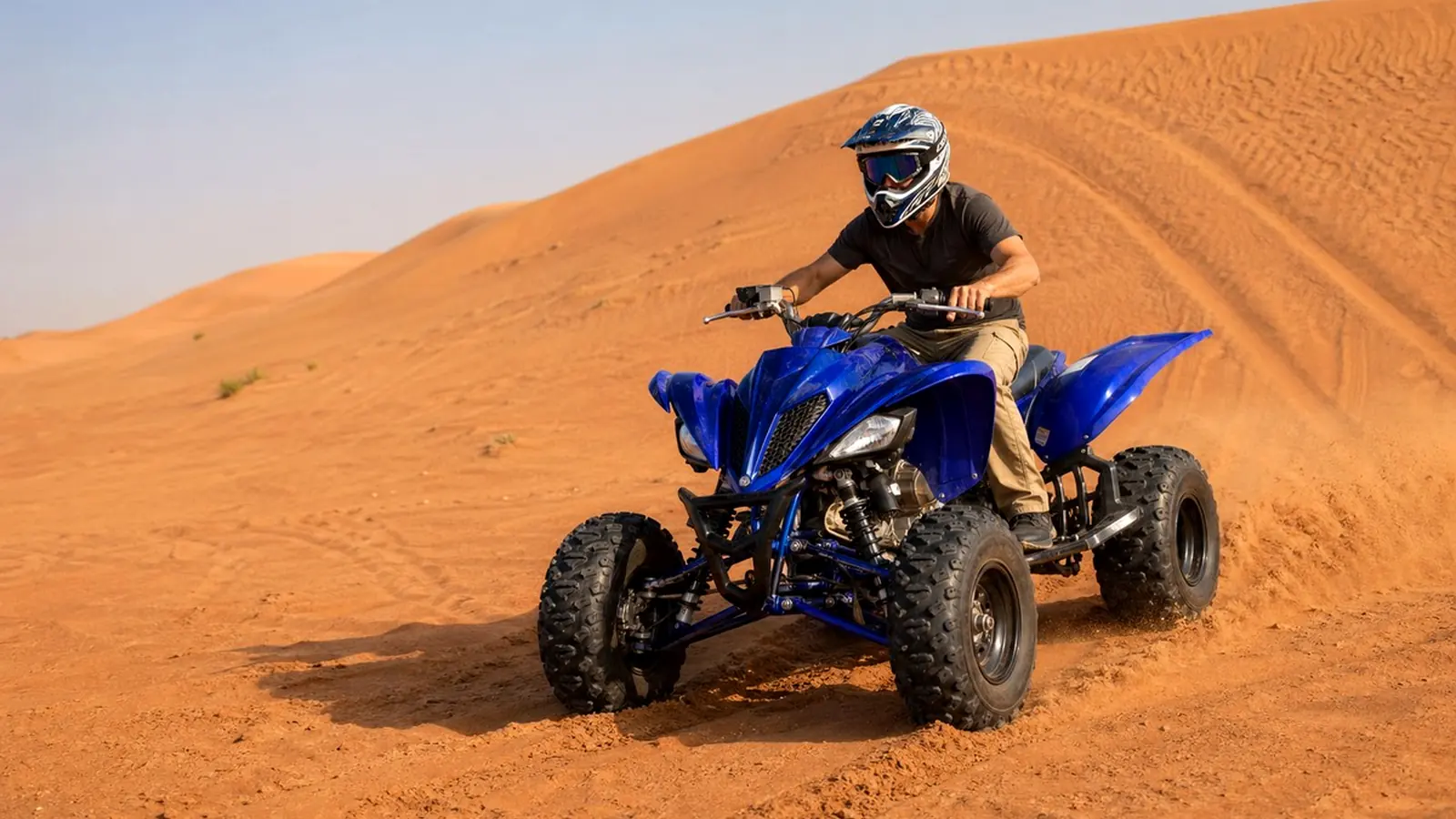
Off-road tyres are the only thing between you and the sand. For dune riding, you want wide, low-pressure tyres with a deep tread pattern. The width spreads the weight, reducing sinkage. The tread grips the loose surface. Standard ATV tyres may work on hard-packed trails, but they dig in on dunes. Look for sand-specific tyres, often labelled as dune or desert tyres. They are usually wider and have a paddle-like tread. Check the sidewall strength as well. Sharp rocks and camel thorn can puncture a thin sidewall. A small investment in good tyres transforms how the buggy handles. If you are renting, ask the operator what tyres are fitted and whether they are suited to soft sand. A buggy with worn tyres will slide unpredictably.
Inspect the safety harness and frame
A buggy that throws you around is dangerous. The safety harness should be a proper four-point or five-point system, not a lap belt. Lap belts alone let you slide forward on a steep descent. A harness that crosses your shoulders keeps you in the seat. Check that the straps are not frayed and the buckles click securely. The frame should have a roll cage that extends above your head. Sit in the buggy and confirm you have at least a hand's width of clearance above your helmet. The roll cage should be welded, not bolted, and should show no signs of rust or cracks. If you are on a guided tour, the operator will check this, but you can still glance at the condition of the harness and frame before you set off.
Consider the steering and braking system
Dune buggies typically use either a rack-and-pinion steering system or a direct linkage. Both work, but the feel differs. Rack-and-pinion gives a lighter, more precise steering action, which helps when you are correcting on a loose slope. Direct linkage is simpler and tougher, but it can feel heavy. Try turning the wheel while the buggy is stationary. There should be no excessive slack or grinding noises. Brakes are equally important. Hydraulic disc brakes offer consistent stopping power. Check that the brake pedal has a firm feel and does not go to the floor. On sand, you rarely need hard braking, but you need control when you crest a dune and find a drop on the other side.
Assess the cooling and ventilation
The desert heat is relentless. A buggy that traps heat inside the cockpit can make a short ride uncomfortable. Look for open sides or mesh panels that let air flow through. Some buggies have a small windscreen that deflects sand but still allows breeze. Engines can overheat too. Check that the radiator or cooling fins are clean and unobstructed. A buggy that has been running hard for twenty minutes should not be steaming. If you are renting, ask how the vehicle is maintained. A well-kept buggy will have clean coolant and no oil leaks. Overheating is a common cause of breakdowns on long dune runs.
Match the buggy to the type of ride
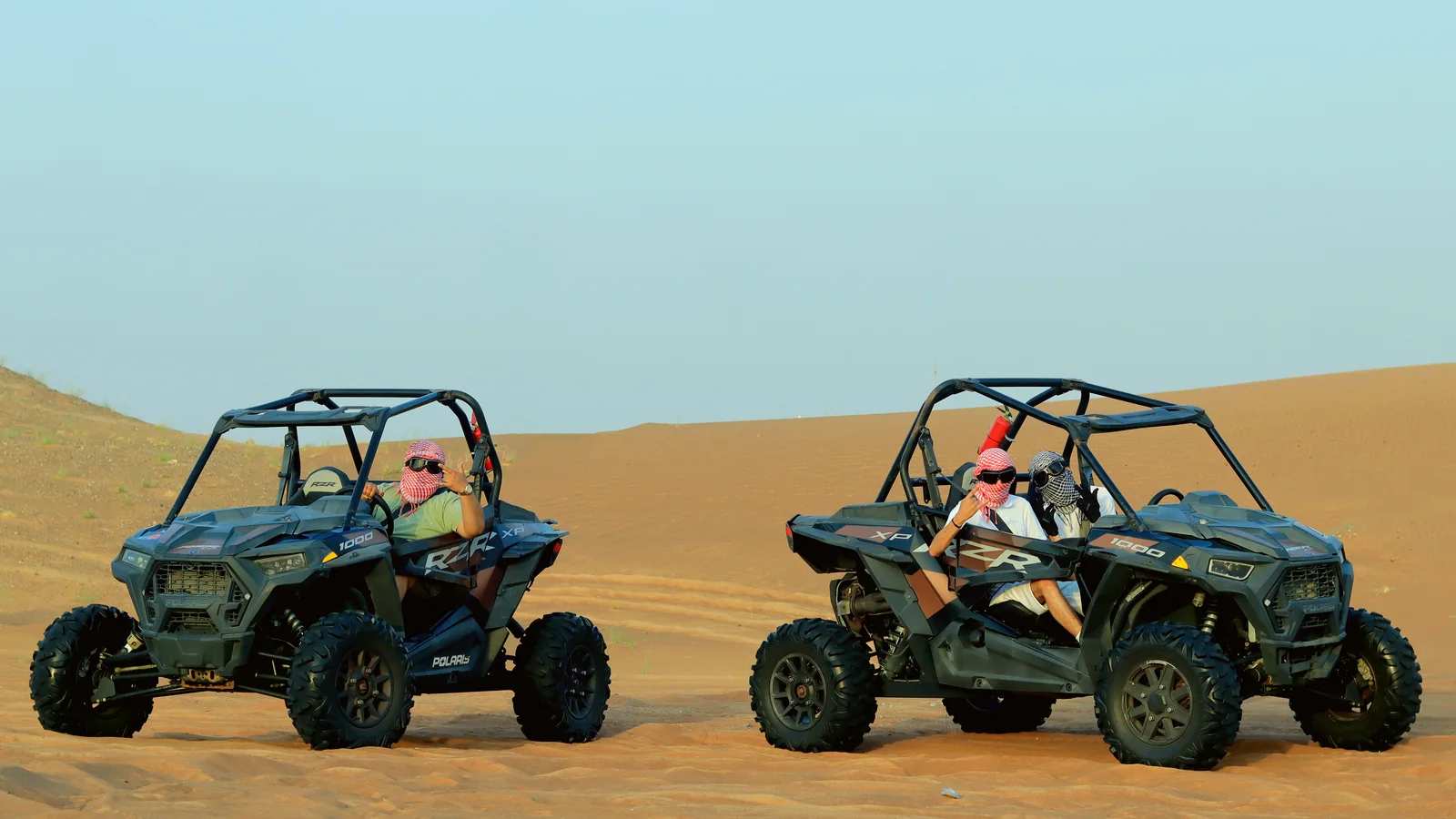
Not all desert rides are the same. A slow, scenic tour through the dunes calls for a comfortable two-seater with good suspension. A fast, adrenaline-focused ride suits a light single-seater with responsive controls. If you plan to do both, look for a buggy that offers adjustable suspension or multiple ride modes. Some modern buggies let you switch between a soft setting for dunes and a firm setting for flat terrain. Ask the operator or seller what the buggy is primarily designed for. A machine built for racing will be stiff and loud. A machine built for touring will be quiet and smooth. Choose the one that matches the experience you want.
Look for helmet and goggle compatibility
You will need a helmet and goggles in the desert. The buggy's cockpit should have enough room for a full-face helmet without forcing you to tilt your head. The seat position should let you see the dune ahead without straining. Goggles need to fit under the helmet strap easily. If the buggy has a low roll cage, a tall helmet may hit the roof. Try sitting in the buggy with your helmet on. If your head touches the cage, that buggy is too small for you. On a guided tour, the operator provides helmets, but you can still ask about compatibility before you book.
Verify the condition of the buggy if renting
If you are renting a buggy in Dubai, the condition of the fleet matters. Look at the general wear. A buggy with faded paint and scratched plastic may still be mechanically sound, but heavy cosmetic wear can indicate poor maintenance. Check the tyres for cuts and the frame for dents. Ask when the last service was done. A reputable operator will have a logbook or a sticker showing the service date. Listen to the engine when it starts. It should idle smoothly without coughing. A rough idle may mean a dirty carburettor or a fuel issue. If the buggy does not feel right, ask for a different one. Most operators expect this and will swap it without fuss.
Choosing a buggy dubai desert vehicle comes down to matching the machine to the terrain and your skill level. A single-seater with wide sand tyres, a secure harness, and good ventilation will serve most riders well. If you are a beginner, a two-seater with a calm engine and soft suspension gives you room to learn. If you are experienced, a lighter buggy with a responsive steering system lets you tackle the dunes with precision. The key is to test the fit, check the tyres, and verify the safety gear before you commit.
Riding a buggy dubai style is about enjoying the landscape without fighting the machine. Take the time to inspect the buggy, ask questions, and choose a vehicle that feels right for the ride you have in mind. The desert will do the rest.